
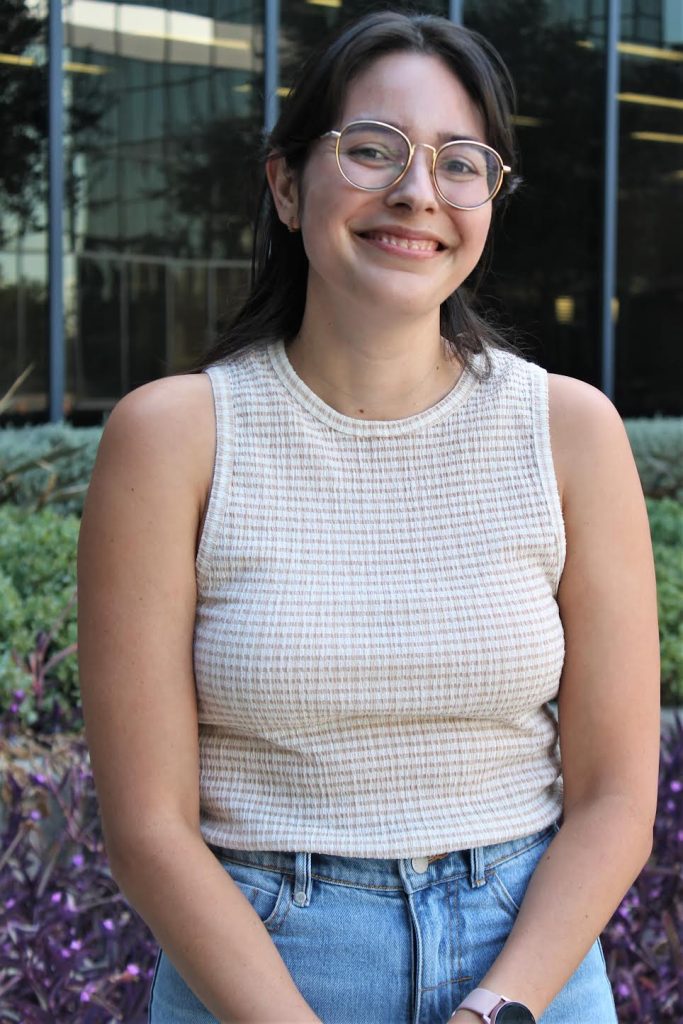
 When Alexis Hernandez applied for the Environmental Nature Center’s Horticulture Internship, she already knew she loved plants.
“The Horticulture Intern role aligns with what I’m most passionate about…plants!” she wrote in her application. “I have always had a deep connection with nature and plant behavior.” She hoped the internship would deepen her understanding of native plants while allowing her to “help maintain the land and ensure native species have the chance to not only grow but thrive.”
A botany and plant pathology student already volunteering with OC Parks and the Wetlands and Wildlife Care Center, Alexis arrived at the ENC with curiosity, enthusiasm, and a strong desire to learn. Over the course of her internship, that curiosity evolved into something deeper: a growing ecological understanding of how plants interact with soil, water, climate, and one another.
As part of the internship, Alexis and fellow intern Dylan were challenged to select a largely bare area within the nature center and transform it into a functioning native garden.
The pair chose a shaded site beneath a mature oak tree — a beautiful but challenging environment with highly variable soil conditions.
“The soil was highly variable – moist and clay-like in some patches, dry and crumbly in others,” Alexis reflected, “which made durability a key factor in plant selection.”
Working within those constraints, they carefully selected native species suited to shade and inconsistent moisture, including hummingbird sage (Salvia spathacea), California hedgenettle (Stachys bullata), Catalina currant (Ribes viburnifolium), California coffeeberry (Frangula californica), Pacific coast iris, and yarrow. Through consistent watering, observation, and maintenance, the garden gradually established itself over the course of the internship.
But the experience became about much more than maintaining plants.
“The internship deepened my understanding of plant biology, soil science, and irrigation practices in ways I had not anticipated,” Alexis wrote.
She described learning not only practical horticulture skills, but also broader ecological concepts — from root systems and irrigation strategies to the ways plants photosynthesize, absorb water, and interact within ecosystems.
“Working directly with plants reaffirmed my passion for the field and sparked a desire to study them at an even deeper level,” she reflected. “The questions that emerged during my time there have left me genuinely curious and motivated to keep seeking answers.”
That sense of curiosity is exactly what the ENC hopes to cultivate through its horticulture internship program, which offers hands-on experience in California native plants, habitat restoration, irrigation, propagation, trail maintenance, and ecological stewardship.
ENC Horticulture Manager Krystal McGee saw that curiosity in Alexis from the beginning.
“Alexis has a natural attentiveness to the landscape that you can’t really teach,” Krystal said. “She asks thoughtful questions, notices subtle changes in plant behavior, and genuinely wants to understand why ecosystems function the way they do. Over the course of the internship, it was exciting to watch her grow from someone eager to learn into someone beginning to trust her own ecological instincts.”
Alexis’ reflection also speaks honestly about the realities of learning in a dynamic, outdoor environment. During the earlier part of her internship, she often relied on independent research to fill gaps in her understanding.
“Much of my foundational knowledge came from independent research, which built self-sufficiency but also highlighted how much more I could absorb with structured guidance.”
Rather than discouraging her, that process strengthened her confidence and independence as a learner. As the internship progressed, she was given increasing opportunities to apply what she had learned through real-world planting decisions and design work throughout the center.
“I was also given the freedom to select plants for various areas around the center and develop functional planting designs for spaces in need of more vegetation,” she wrote, describing it as “a rewarding opportunity to apply everything I had learned and take real ownership of my contributions.”
Some lessons left especially lasting impressions. One memorable moment came while learning about redwood trees and their remarkable adaptation of absorbing water directly through their foliage. Discoveries like these transformed everyday horticulture work into something richer — a deeper understanding of ecological adaptation, resilience, and interconnectedness.
By the end of her internship, Alexis described feeling not only more knowledgeable, but more connected to the natural world itself.
“My time at the Environmental Nature Center was a formative experience that shaped the way I observe and connect with the natural world,” she reflected. “I leave this internship with a clearer sense of direction, a deeper appreciation for native plant communities, and a genuine eagerness to keep learning.”
At the ENC, internships are designed to do exactly that: create opportunities for emerging environmental leaders to build practical skills while developing deeper relationships with place, ecology, and stewardship. For Alexis, that journey began beneath the shade of an oak tree — and continues to grow.